Thursday, 18 April 2013

Halley's Comet Society 2061 Tie

There has been a lot of interest in comets lately with Comet C/2012 predicted to be a naked eye object in November, some are already calling it 'The Comet of the Century'! I shall remain cautious and not get my hopes up too high*, but it is nice to see the public discussing the arrival of the comet. It also provides me with the perfect excuse to share my latest customised accessory with you!
 Being an amateur astronomer naturally I am an avid viewer of ‘The Sky at Night’ and a regular subscriber to its magazine. One of the features that I always look forward to are the magazine’s cover disks that feature classic episodes of the show. I noted that during the early part of the 1980’s Sir Patrick stopped wearing his trademark RAF tie and instead wore a blue tie with '1986' embroidered on it, the '9' replaced by a comet with a blazing tail. In astronomical terms 'nineteen eighty-six' was a big year as it marked the return of Halley's Comet to our skies. One of our better-known comets, visible to the naked eye (from Earth) every 75–76 years. However the tie wasn’t just a reminder of the Comet’s return, interestingly (or at least I thought so) it actually belonged to the now seemingly forgotten Halley's Comet Society of London.
Founded in August 1975 by Halley's Comet enthusiast Brian Harpur, this group of enthusiasts held meetings in honour of Halley’s Comet and in his book ‘The Official Halley’s Comet Book’ Harpur explained the society and the ties, “The former attracted a wide variety of founder members at my own personal invitation on the intriguing basis of having no rules, no committees, and no annual subscriptions. The only obligations were the purchase of a tie (for the men) bearing our special ‘1986’ logo, which I designed with the ‘9’ shaped like a comet, and to pronounce Halley as ‘Hawley.” 
All proceeds made from the sale of the ties (and medallions for the ladies) were donated to the Duke of Edinburgh’s Award Scheme and it was reported that membership ties rocketed from one in 1975 to over 500 by 1983- all by word of mouth. Sir Patrick, in his book ‘TV Astronomer: Thirty Years of The Sky at Night’ Sir Patrick also recounted the Society and it’s tie, “I myself a founder member of the Halley’s Comet Society, which had been master-minded by Brain Harpur in the mid1970’s. We have our own special tie, with a 1986 motif, and we are, we feel, unique inasmuch as the Society has no aims, objectives or ambitions, and does nothing except meet periodically on licensed premises. (One such gathering was held in the Long Room at Lord’s; I think I was about the only regular cricketer present.) It has even been said that the Society is the only completely useless organisation in the world, apart, of course, from the United Nations.
Issue#63 of the Sky at Night Magazine featured episode#392 on its cover disk, (originally aired December 1986) at this point the comet had passed and Sir Patrick reflected on what he called “the year of the comet”. He then pointed out that his tie no longer bares the 1986 insignia, but instead a ‘2061’ variation acknowledging the year of the comet’s return.  This tie had been introduced at the very last society meeting in November as stated in ‘TV Astronomer: Thirty Years of The Sky at Night’, “We have now altered this to a 2061 design, to mark the next return of the comet. Our meeting on 13 November 1986, following an impressive ceremony in which a Halley plaque was unveiled in Westminster Abbey, Eamom Andrews turned up wearing the first of the new ties- a classic piece of one-upmanship.” 

Halley's Comet Society ties worn by Sir Patrick Moore. '1986' October 1982 and '2061' December 1986
It seems that the society faded away shortly after because at the time of writing this I found very little information about it. In fact were it not for a very interesting site by former President of Halley's Comet Society, U.S.A (not to mention original society tie owner) Mr. Joseph M. Laufer there would be no information at all about it online.  But having learnt so much about the society I wanted a tie for myself! And thanks to the creative talents of my good friends Barry McCabe of GOODJOLT and seamstress extraordinaire Iris Hung I now have one of my own! Bearing the 2061 motif it both reminds people to look out for the comet and salutes the fascinating society once devoted to it. I was 7 at the time of Halley’s Comet 1986 visit and like many others in the United Kingdom I didn’t get to see it. I should be 82 when it returns but I’m not placing any bets on ever seeing it in my lifetime as Sir Patrick closed his chapter about the comet, “I am not likely to see it myself, unless I live to be the unusual age of a hundred and thirty-eight. But no doubt there will be full Sky at Night coverage, and perhaps my successor of that period will even be able to carry out a live broadcast while standing on the velvet-black nucleus. Time will tell. Just in case you hope for a better view in 2061, I must point out that conditions will, if possible, be even worse than they were in 1986. Look out for the comet by all means, but don’t say that you haven’t been warned. “
Dedicated to Sir Patrick Moore  and Brian Harpur.

The Official Halley’s Comet Book aside, other official Halley’s Comet Society products!
My sincerest thanks to Barry McCabe and Iris Hung for all their help, why not visit Joseph M. Laufer’s site and learn more about this fascinating society?

2019 Update: Find out how acquired my very own  Halley’s Comet Society tie!

* I was right to be cautious C/2012 S1 also known as Comet ISON speculated to be the "Comet of the Century" was disintegrated by the heat of the sun on the 28th of November 2013.

© Arfon Jones 2013. All images are copyrighted throughout the world.

Friday, 5 April 2013

Lament for a Video Shop

Well, It must be at least five minutes since my last nostalgic ramble! But to be fair this post is just as much about my influences as an artist… I find that many of my more recent works seem to hark back to this particular subject matter, something that is steadily becoming a forgotten part of my life ‘'Ye Olde Video Shoppe'. I found myself reminiscing about this more than usual after a chance visit to a Blockbuster, a rare thing indeed.  Thanks to dull dvd covers, new titles that I have little to no interest in and an absence of promotional posters and cut-outs to aid my selection I walked out without a film to watch, muttering about the ‘glory’ days of VHS rentals. But it would seem that even these kinds of outlets are becoming a thing of the past with more and more people streaming CGI movies with Photoshoped covers via the Internet.  The simple ritual of picking out a Friday night movie at the video shop is slipping away from us, gone are the days of either leaving it to chance by browsing your genre of choice or remembering the title previewed at the beginning of last week’s tape. I always judged a video by its cover, I would browse through rows of (mostly) illustrated covers or glance up at the dusty posters that line up the walls. Each one trying its best to attract my attention with the coolest looking monster or sexiest leading lady. Something I have tried to encapsulate in the poster for 'Zombies from Ireland' and my illustration for Empire Magazine’s ‘Kim Newman’s Video Dungeonpage.
My rural roots may have played a part in my love for these places. We only had one actual video shop in the village and it closed down in 1994. As a matter of interest at the time of writing this the empty shop is still there its sign still placed above the door and much like our village watchtower seems to be a relic of a bygone age.
A great shame as it took a few years to materialise as most business had (it would seem rightfully so) played it safe by just devoting a corner of their establishment to video releases. If I were to go even further back we rural folk had to rely on a Video Van for our rentals! Namely a decommissioned Ambulance or a removals van that pulled up outside your door fitted with wooden shelves brimming over with video releases secured by a length of net curtain spring! Happy days! So imagine my joy when I first walked into a shop solely devoted to the hiring of films! I was blown away by posters for the ‘House’ franchise and a large embossed cut-out for the 1988 ‘Blob’ remake and even though I wasn’t allowed to watch such films they made me WANT TO! Something that seems to be lost nowadays. As these shops slowly decreased in numbers I would still pop-in and try and find the most obscure titles they had, favouring large dusty and bashed VHS cases covered in stickers supporting covers faded from years of direct sunlight that despite all these imperfections still managed to reel me in! Someone recently told me that my Ghostwatch poster made them want to watch it again I found this to be most gratifying. As we draw ever closer to the release of Hellbound Media’s SlaughterHouse Farm #1 my fondness for the classic days of video hire will become even more evident. I realised that I wasn’t the only one that felt this way about video rentals when they approached me to illustrate it (not to mention provide a tagline!) So I am confident that a great many of you will ‘get’ the references when you see the cover for the first time and have you also harking back to the glory days of the video shop.

Update 2015: Lament for a Video Shop:Supplemental

© Arfon Jones 2013. All images are copyrighted throughout the world.

Sunday, 31 March 2013

Wonderments and Atrocities: Iron Eaters

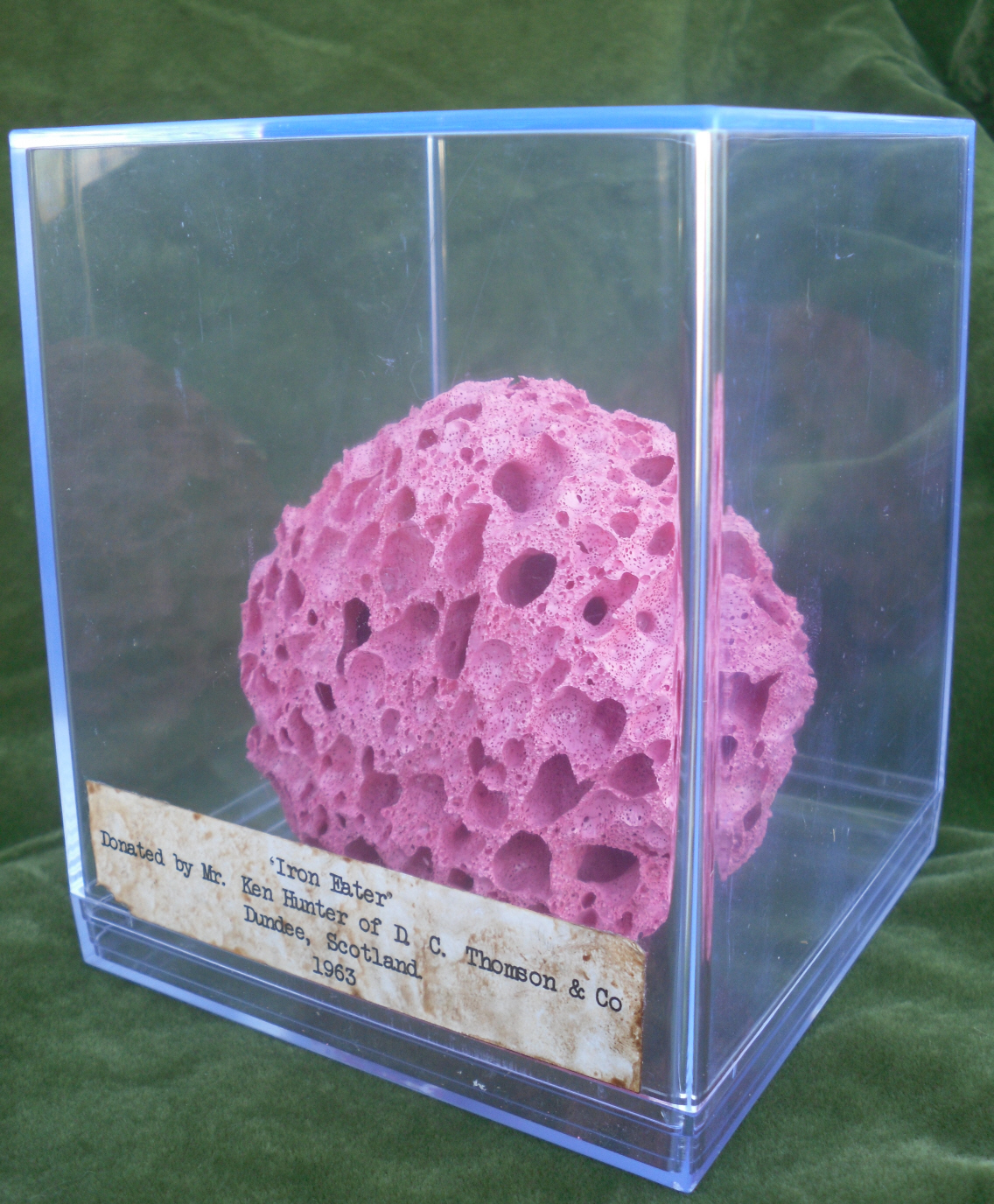
One of my previous posts goes into far greater detail about my love of D. C. Thomson comics and the annuals that I have amassed over the years. The annuals feature mostly comic/ cartoon based stories but they also contain three or four adventure-based stories too and even though I tended to favour the humour-based stories there was one adventure story that I remember fondly, The Iron Eaters! Illustrated by Ken Hunter (1917 – 2008) for the Beezer. The Iron Eaters story ran in the comic from 1963 to 1964 and told of pink, extra terrestrial sponge like weeds that devoured metal!  It was the 1966 annual that introduced me to this amazing series reeling me in with this fantastic hook!
Months had passed since the Iron Eaters invaded Britain. Weeds from outer space, they were, strange, sponge-like objects that had descended like a plague of iron eating locusts. In a week they had paralysed the country. But all that was over. Every Iron Eater in the land had been wiped out- or so folk reckoned. They were wrong. One had escaped. In a disused old warehouse in Hartford town, where the iron eaters first appeared, lay a solitary space sponge- a giant of its kind, bloated by the iron it had gorged in the warehouse, too big to leave by the window it had entered. So there it lay, covered by cobwebs, for month after month after month…”  

Each story started with a similar back-story that would also introduced us to our characters “Strange iron-eating weeds from outer space had invaded Britain. For many months they had caused chaos up and down the country. But a team of scientists led by Professor Jim Robertson had worked long and hard to rid the country of the menace and now it looked as if they had succeeded. No Iron Eaters had been seen for days…” In all the stories I read it seemed that it was the professor’s son Tommy that did most of the work, which usually revolved around an Iron Eater showing up and causing all manner of chaos until Tommy captured or destroyed it. The image of these sponge like beings have remained with me ever since, as a child it would be inevitable that I would take a ball of Plasticine and pierce it several times with a pencil to make it resemble an Iron Eater! So, with such an endearing memory my collection of artifacts would simply not be complete without an Iron Eater specimen amongst it so here it is, preserved in a Perspex container (safety precaution) with a label that reads,  ‘Iron Eater’ Donated by Mr. Ken Hunter of D. C. Thomson & Co Dundee, Scotland 1963.
  
EXTRA: Also in the collection is an Iron Eater that once belonged to Tommy Robertson!


© Arfon Jones 2013. All images are copyrighted throughout the world.

Monday, 18 March 2013

Bangor Science Festival Weekend

Yet another weekend out of the studio (This is starting to become a habit!) a weekend of both business and pleasure (but mostly pleasure). Visiting two of my favourite locations in Bangor, having returned home I attempted to sum up the weekend on Facebook. Thinking a list would be boring I wrote, “A marvellous weekend of science history and art, very pleased with how it all turned out”. Moments later it was suggested that I was somewhat “mysterious” by my dear friend Rachel White! Explaining how I thought a long-winded run-through of my weekend would be boring to read she answered, “you're wrong matey!” So, if that’s the case please permit me to run through my Bangor Science festival weekend for you all!

Bangor Science Festival Weekend: Day 1 Saturday 16th 2013
School of Biological Sciences. Brambell Building, Bangor.

 
Bangor Science Festival is part of the National Science and Engineering Week organised between the Dr Tom Parry Jones Endowment Fund, (Established by Dr Tom Parry Jones OBE, inventor of the electronic breathalyser to encourage young people to develop careers and entrepreneurship in science and technology.) and Bangor University. Each year they offer something “for everyone, with activities for families and schools groups, adults looking for entertainment and stimulating debate, or professionals interested in the latest research.” With that in mind off we went my family in tow.
First stop, the Basement floor where we were treated to a guided tour of the University’s aquariums, a genuine treat, as it’s not usually open to the public. Living within the countless tanks were a wide array of species found in the Menai Strait along with tropical fish, guppies and cichlid fishes from Africa. (I was equally interested in the archaeological finds discovered at the bottom of the Menai displayed around the room!) Studies were being conducted on the behaviour of fish. One such experiment into their mating habits had Beth comparing it to a form of piscine speed dating…


The marine biology theme continued on the ground floor as we were invited to ‘dip’ into a rockpool, visitors were offered the opportunity to handle species found living at the bottom of the Menai Strait including the Sea Mouse, Porcelain Crabs and Sea Stars! We also saw a row of shark egg cases displaying the various stages of development complete with shark young!
Then on to the next desk, which I had spied on the way in, I was eager to check it out as it had a replica T-Rex skull balanced on it. Scattered alongside were various fossils along with the opportunity to excavate an Ichthyosaurs fossil, which my daughter and I did. I was then challenged to name all the dinosaurs on display, so I did just that.


We had the opportunity to look at snake fangs under the microscope before crossing over to the Natural History Museum collection. It was nice to finally be able to show the collection (which had been updated) to Beth and my daughter who were equally impressed as I was several months back, this lead us rather aptly to the ‘Hidden Worlds: Hidden Artists’ exhibition.

Hidden Worlds: Hidden Artists’ Exhibition
I mentioned my involvement with this project in the last post but, for the last 5 months I have been visiting the Natural History Museum collection with other local artists, drawing inspiration from the exhibits and we presented our work for the Science week festival.
I was recently quoted by the University’s events page to help promote the exhibition, "'it has been exciting being able to leave my studio and sit amongst all the wonderful specimens housed at
the Brambell Building museum, long may it continue to educate and inspire others as it has me
". The pieces I exhibited were “Philip J. White (1862- 1926)” a portrait of the first curator of the Zoology Collection Professor Philip J. White (and 18 specimens from the collection) and by popular demand ‘Womblus Wimbledon Vulgaris’ who watched over the works of Julie Gritten, Lisa Hudson, Harri Carmichael, and Lindsey Colbourne. Each piece reflected our take on this collection. It seemed well received by all that wondered in to have a look. My fellow Hidden artists did an amazing job, it was a delight working alongside them


Julie Gritten
Harri Carmichael


Lindsey Colbourne
Lisa Hudson


Bangor Science Festival Weekend: Day 2 Sunday 17th 2013
Treborth Botanic Garden, Bangor.


When I discovered that Treborth Botanic Garden was opening its doors to the public I was delighted, having visited before I wanted to further explore the grounds! This beautiful location located next to the Menai Suspension Bridge crossing was originally developed as a Victorian tourist destination, designed by the great Sir Joseph Paxton. However funding issues resulted in the project being abandoned leaving the grounds to revert to pasture and woodland until Bangor University bought the land in the 1960’s making it the beauty spot it is today.
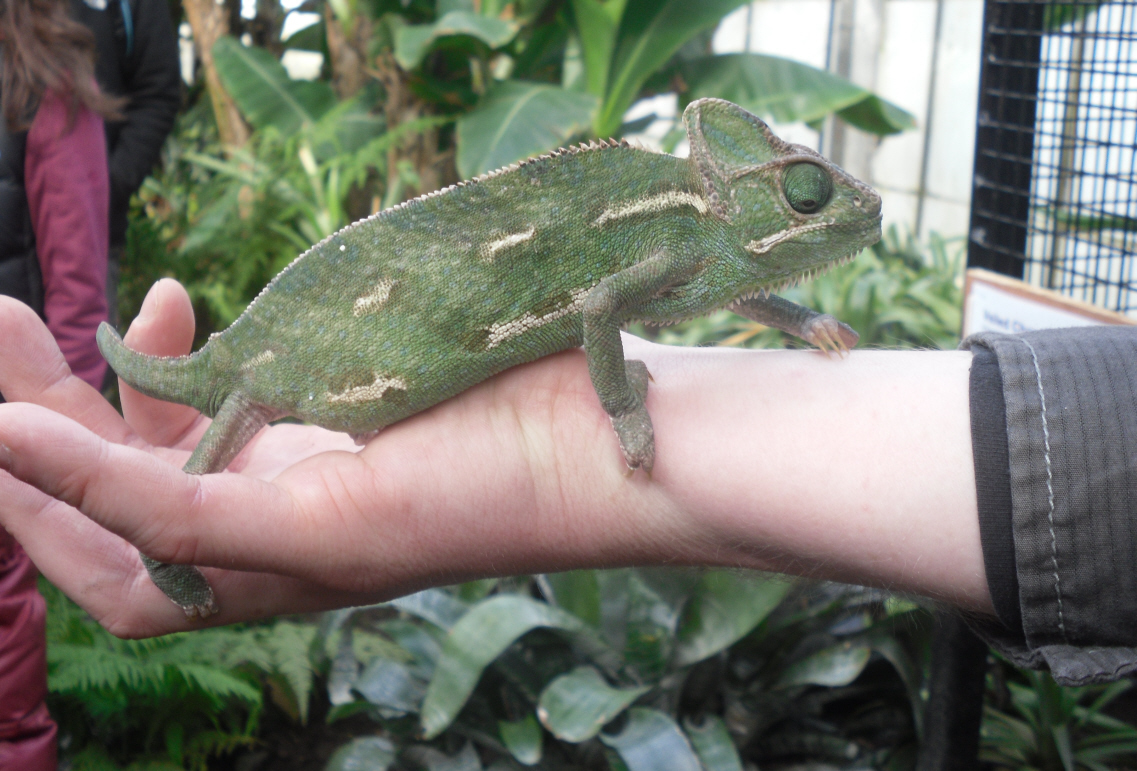
So we returned to Bangor to explore Treborth’s Glasshouses for ourselves. I rarely have the opportunity to post about my botanical pursuits on here (I hope to rectify that in a future post). I have had a long-standing fascination for Ferns and Insectivorous Plants, so naturally making my way around Treborth’s glasshouses was a pleasure. The icing on the cake had to be various species of reptiles on hand, to my delight one of them was a Chameleon who will soon be moving into the glasshouse!

Equally interesting (for a nerd like me) was being allowed to visit the Rhizotron! This newly refurbished underground laboratory allows for easy access/ viewing of the soil and root systems. Also on hand were several microscopes that we couldn’t resist looking at! I had a marvellous time, I hope to go back there again very soon. And that was Bangor Science Festival Weekend, we all had a wonderful time and I was privileged to play a (granted a minute) part in it. If you are a nerd/geek like me but you didn’t make full use of the festival this year be sure to look out for next years to assure that you too have a “A marvellous weekend of science history and art”!


 © Arfon Jones 2013. All images are copyrighted throughout the world.

Thursday, 14 March 2013

Professor Philip J. White

I documented my visit to Bangor University’s natural history collection back in June. Well, I have since made several return trips as part of a small group of local artists that meet once a month at the museum to create art inspired by this magnificent collection. These pieces will be exhibited in the Brambell building as part of Bangor Science Festival on the 16th of March between 10:00am - 04:00pm.  Come along and see our work and take advantage of this opportunity to visit this amazing natural history collection for yourselves along with the University’s aquarium and microbiology labs!
The piece I have created for this exhibition depicts the first curator of the Zoology Collection Professor Philip J. White (1862- 1926). As I worked on this piece I was fortunate enough to learn a great deal about this interesting individual and his work, harking back to my Science Spotlight series produced in 2010. Most of the information was obtained from the Gwynedd Museum & Art Gallery and the Bangor University Archives so I have decided to present my ‘findings’ on here along with the portrait in the hope that it will be of interest.

Professor Philip J. White (M.B. (Edin.), F.R.S.E., F.Z.S.) was Born in Aberdeen in 1862 Philip J White was a fellow of The Royal Society in Edinburgh and in 1889 was appointed lecturer at the agricultural department at The University College of North Wales (now called Bangor University) the first of its kind in Great Britain.
He was passionate about zoology and strived to educate others on the subject and was commended for his efforts in bringing his beloved subject to the public. In 1895 he lectured on Agricultural Zoology at Bangor, Caernarfon, Conwy and Pwllheli, sometimes to audiences of two hundred and fifty in a bid to raise awareness in agricultural science. He was well known for his research and promotion of sea fisheries in North Wales and his efforts for the inauguration of the Marine Biological station on Puffin Island. His collection of “fishes, shellfish and fishing gear” were shown, at the Yachting and Fisheries Exhibition, London in 1897, (and at the National Eiesteddfod in 1902 and 1906.) The Committee for the Promotion of Welsh Industries awarded him a diploma for his services to Welsh fisheries and the Caernarfon Eisteddfod awarded a grant towards his fisheries collection.
He was elevated to Professor of Zoology in1896 after the U.C.N.W. founded the Department of Zoology with White as its first head and sole member of staff.
J. Gwynn Williams in his book, 'The University College of North Wales: Foundations 1884 - 1927', explained, " The burdens upon him were very great, for in addition to the duties of the chair those of a skilled laboratory assistant were thrust upon him for many years…".

The University had a museum located on the second floor of the college buildings in the old Penrhyn Arms Hotel. Established in 1884 it contained a mixed subject collection devoted to the subjects being taught at the university at the time. In 1898 White was reported to have said that the foundation of a zoological collection in the U.C.N.W. museum (of which he was mentioned in minutes in 1891 as being ‘Vice Chairman of the Museum Committee’) had been a “matter of absorbing interest” to him.
His search for specimens was relentless and he amassed an impressive collection, “Specimens came from far and near, fishes from Ceylon, a sea-otter from Alaska, unspecified specimens in recognition of the department's services to the sponge fisheries of the Levant, insects brought by White himself from West Africa, a stag given by Edward VII and several gifts presented by G.W. Assheton Smith, including a fine Wapiti stag from his private zoo at Vaynol....” (The University College of North Wales: Foundations 1884 – 1927, J. Gwynn Williams). Skilled at dissection he regularly updated the collection.  It was documented that he once acquired the carcass of an elephant from a travelling circus and later left it to decay in the Bishop's Park until the bones were bare and dry, a method he often applied. When the new University buildings were built in Upper Bangor in 1911, they included a purpose built space for the Museum, next to the Library. It was still a general museum, containing historical and scientific material when White was appointed its first curator in 1913, then when the museum was rearranged in 1925, and collections separated, he became curator of the Zoology Collection until his death in 1926.

His obituary published in the ‘Bangorian’ in 1930 by friend and colleague the entomologist Dr. W. Maldwyn Davies wrote that White had a keen desire to create interest, “he deemed it a privilege to impart to others his knowledge, interest and enthusiasm for the subject he was so enthralled. He had a gift of thinking simply and the art of writing so that all who wished might understand.” He described White as having a “congenial manner” with a great affection for his students. Apart from zoology he was well aquatinted with classic literature and scripture as well. Davies elaborated, “reluctantly he would pardon unfamiliarity with the derivation of zoological nomenclature, but there appeared no forgiveness for ignorance in Bible quotation”. Adding that, “His passionate outbursts and apparent despair when his students were found wanting will ever be remembered. Such were not resented; on the contrary, they incited a deep sense of regret and subsequently that deep respect and admiration for the devotion to zoology so characteristic of Dr. White

That was Professor Philip J. White. Researching the man and his work has added a new dimension to the museum for me. Now when I visit I am reminded of what Dr. W. Maldwyn Davies said, “It appeared his life’s motif to bequeath to his very own department a museum worthy of the name of Philip White. It now stands a magnificent memorial to a life devoted to zoology and its department at Bangor. Posterity alone can appreciate its full worth.

My sincere thanks to,
Dr Rosanna L.Robinson at the College Of Natural Science, Bangor
Esther Elin Roberts Curator at the Gwynedd Museum & Art Gallery, Bangor
Lynette Williams at the Bangor University Archives


References:
The University College of North Wales: Foundations 1884 – 1927’ by J. Gwynn Williams'
The Old Bangorian : Magazine of the Old Students' Association of the University College of North Wales.' No. 2, January 1930. pp. 31-32’

'Hidden Worlds: Hidden Artists' - Brambell building 16th of March 10:00am - 04:00pm. 

© Arfon Jones 2013. All images are copyrighted throughout the world.
Slaughterhouse Farm ‘sneaky peek’

I managed to get out of the studio for a few hours last weekend only to end up in another. I was invited along by Hellbound Media to attend a photo shoot for the forthcoming ‘Slaughter House Farm’ comic which I illustrated.
There isn’t long to go now before the comic is officially released but never the less I wouldn’t want to give too much away so I shall only post this small ‘sneaky peek’ taken at the shoot featuring model/ actress Sian Davies. Keep up to date on the comic’s progress by joining the Hellbound Media facebook page.

On the subject of Hellbound Media, and previews, Shock Value Blue is out now! This 52-page publication promises to be more shocking than ever! Features even more tales of the surreal and horrific from writers and artists gathered together from around the world, AJ Ballard, Anna Susanne, Atlantisvampir, Mark Adams, Matt Warner, Tatiana Goldberg oh and me! Follow the link to order your copy!

© Arfon Jones 2013. All images are copyrighted throughout the world.

Thursday, 7 March 2013

Ghostwatch: Behind the Curtains DVD


This week I received an advanced copy of the eagerly awaited Ghostwatch: Behind the Curtains documentary dvd. This retrospective documentary about the programme features interviews with cast and crew that discuss its production and how it has endured over years. I often mention Ghostwatch and my love for it on this blog, I watched the original broadcast back on in 1992 and it made an impression on me. For many years I kicked myself for not recording it (the BBC never dared to repeat it) and so I was over the moon to discover that the BFI had released it on dvd. Sitting down to watch it again 16 years later I was not disappointed with it and since that second viewing I have followed this documentary project with great interest even creating two pieces devoted to it, one of which was commissioned by the project itself. ‘Halloween 1992’features the cast along with some familiar elements from the show, it was used as a teaser poster on the 20th anniversary and it can be seen on the inside of the dvd which is now available to buy.
Be it an interest in horror, you grew up in the 90’s and remember this classic horror drama or better still it made a lasting effect on you I urge you to buy it and check it out.
My sincerest congratulations to all involved in the production of this wonderfully constructed and highly informative documentary.

*UPDATE* The North Wales Chronicle write a little something about it, ‘Artist Arfon's ghostly work for new documentary

© Arfon Jones 2013. All images are copyrighted throughout the world.

LinkWithin

Related Posts Plugin for WordPress, Blogger...